

Hay fever can affect your eyes as well as your nose. When environmental allergens such as pollen, dust mites, mould or animal dander trigger an allergic response, the eyes may become itchy, watery, red or puffy. This is often called allergic conjunctivitis.
Because similar symptoms can also occur with dry eye, infection, irritation or other eye problems, persistent or unusual symptoms should not automatically be assumed to be allergy.
Seek Prompt or Urgent Care
Do not assume a painful, light-sensitive eye or a sudden change in vision is routine hay fever. Seek prompt medical or eye-care assessment for eye pain, a sudden change in vision, significant light sensitivity, or a large amount of discharge or pus. A red or painful eye in a contact-lens wearer also needs prompt assessment.
GET YOUR EYES CHECKED
Itchy, watery eyes?
If symptoms persist or keep returning, a local optometrist can assess the cause and discuss suitable care.
Pain or vision changes? Seek prompt care.
Find an Optometrist →What Is Allergic Conjunctivitis?
Allergic conjunctivitis is inflammation of the conjunctiva, the thin membrane covering the white of the eye and the inside of the eyelids, caused by an allergic reaction. It often occurs alongside allergic rhinitis, commonly called hay fever, but it can also occur on its own.
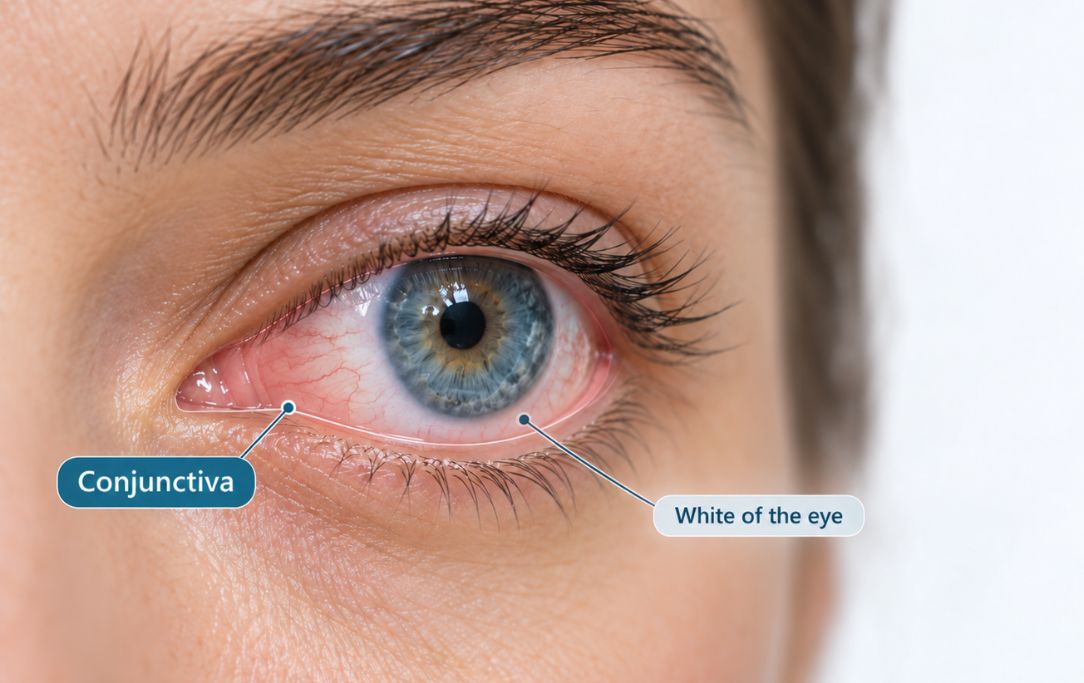
ASCIA explains that allergic rhinitis can be triggered when the nose or eyes come into contact with environmental allergens such as pollens, dust mites, moulds and animal dander.
Typical allergy-related eye symptoms include itching and watering, and the symptoms may be seasonal or present at other times depending on the trigger.
Can hay fever really make your eyes itchy and watery?
Yes. Itchy, watery eyes are recognised symptoms of allergic rhinitis and allergic conjunctivitis. For people with pollen allergy, symptoms may be more noticeable during periods when the relevant pollen is present. Australia does not have one identical pollen season everywhere, so the timing and intensity of symptoms can differ by region and weather conditions.
Common Eye Symptoms Linked With Allergies
Allergy-related eye symptoms may include:
- itching or a strong urge to rub the eyes
- watery or clear discharge
- redness affecting one or both eyes, often both
- burning or irritation
- puffy or swollen eyelids
- a gritty or uncomfortable feeling
Symptoms alone do not confirm the cause. Thick yellow-green discharge can point more towards bacterial infection, while burning, tired or watery eyes can also occur with dry eye. A foreign body, irritation and other eye conditions can also cause redness or discomfort.
Is allergic conjunctivitis contagious?
No. Allergic conjunctivitis is caused by an allergic reaction, not an infection, so it does not spread from person to person. This is different from some viral or bacterial forms of conjunctivitis, which can be contagious.
What can trigger hay fever eye symptoms?
Environmental allergens are common triggers. Depending on the person, these may include pollen from grasses, trees or weeds, dust mites, mould spores or animal dander. Seasonal symptoms are often associated with outdoor allergens such as pollen, while year-round symptoms can be linked with indoor allergens.
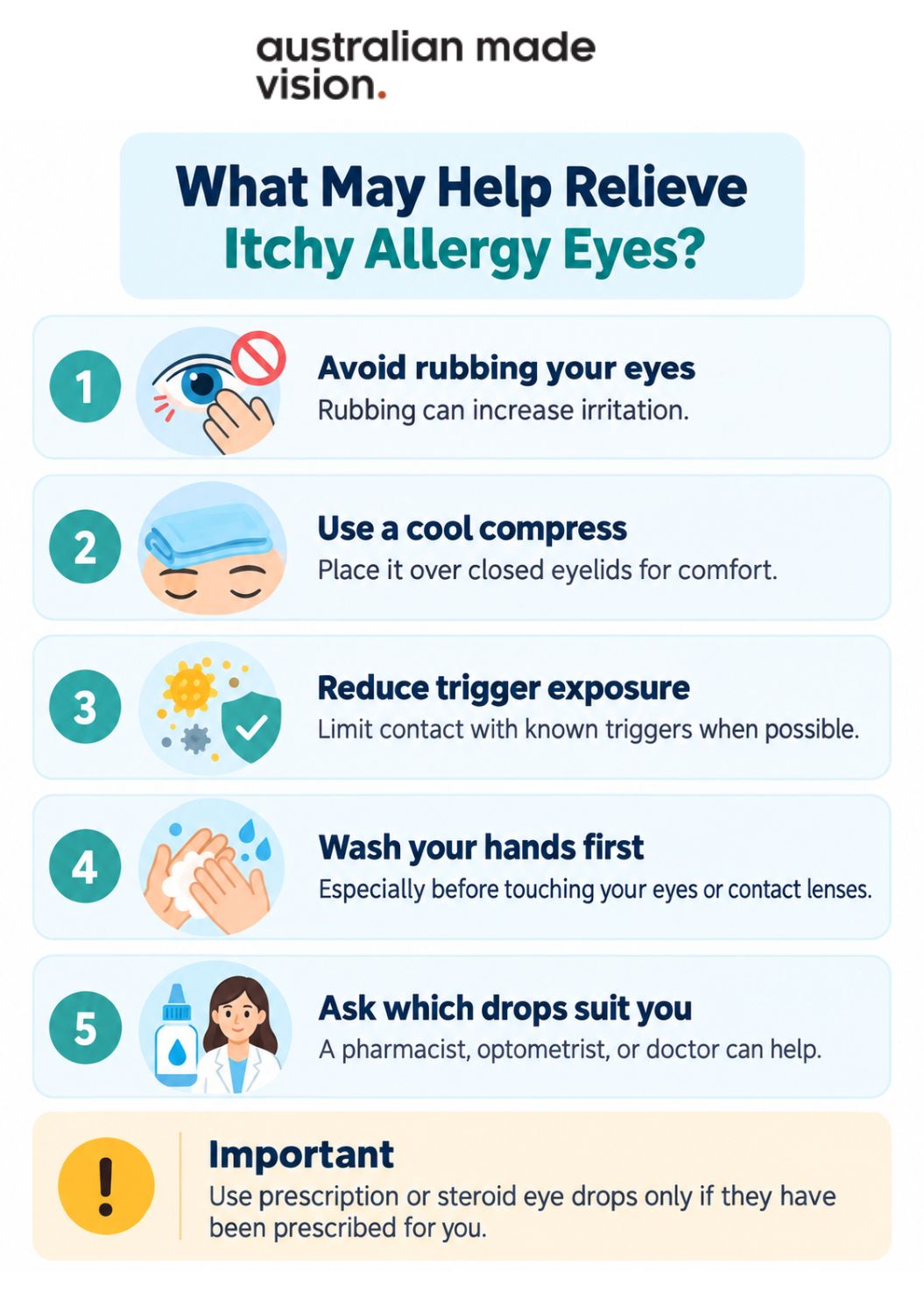
What May Help Relieve Itchy Allergy Eyes?
The best approach depends on the trigger, the severity of symptoms and whether the symptoms are actually allergy-related. For mild symptoms, practical measures may reduce irritation while you monitor how your eyes respond.
Avoid rubbing your eyes where possible, because rubbing can increase irritation.
Use a clean cool compress over closed eyelids for comfort.
Reduce exposure to a known trigger when practical.
Wash your hands before touching your eyes, especially if you wear contact lenses.
Ask a pharmacist, optometrist or doctor which non-prescription allergy or lubricating eye products are suitable for you.
Antihistamine eye drops can help allergy-related watery or itchy eyes, but the right product depends on the cause and whether you wear contact lenses. Ask a pharmacist, optometrist or doctor for advice.
Do not use prescription or steroid eye drops unless they have been prescribed for you and you have been told how to use them. Eye redness has many possible causes, and some treatments that are appropriate for one cause may be unsuitable for another.
Is Your Eye
Health on Track?
Complete our free 18-point checklist to check your eye health, spot any gaps, and take charge of your vision.
Start Free Checklist Test →What if you wear contact lenses?
Contact lenses can complicate a red, sore or irritated eye. Healthdirect advises removing lenses if the eyes become sore and leaving them out until symptoms have resolved. If symptoms do not improve after removing the lenses, seek optometrist or medical assessment as soon as possible.
A red or painful eye in a contact-lens wearer should not be managed as routine hay fever without assessment. Contact-lens-related infections can be serious, so prompt review matters when pain, increasing redness, discharge or vision change is present.
How can you tell allergy from dry eye or infection?
There is overlap, so a simple symptom checklist cannot diagnose the cause. Allergy often causes prominent itching and watering, while dry eye may cause burning, grittiness, soreness or fluctuating blur. Infectious conjunctivitis may produce discharge and can be accompanied by more obvious redness or irritation.
The pattern, discharge, contact-lens use, recent exposure, pain, light sensitivity and any change in vision all help a clinician work out what may be happening.
How is an eye allergy assessed?
An optometrist, doctor or other appropriate health professional may ask when the symptoms started, whether one or both eyes are affected, whether symptoms are seasonal, what exposures make them worse, and whether you use contact lenses or medicines. They may examine the eyes to look for signs that support allergy or another cause.
If symptoms suggest a broader allergy problem, a GP or allergy specialist may be involved. Treatment and referral decisions depend on the cause, severity and examination findings.
When should you arrange an eye examination?
Consider an eye examination if itchy, watery or red eyes keep returning, are not improving with simple measures, are affecting daily activities, or the cause is unclear. An examination can help distinguish allergy from dry eye, infection, contact-lens problems and other causes.
Seek prompt medical or eye-care assessment for pain, significant redness or swelling, marked light sensitivity, sudden or meaningful vision change, or a red/painful eye while wearing contact lenses. Severe eye pain or significant vision loss can require urgent or emergency care.
Questions to Ask an Optometrist or Practice
Could these symptoms be allergy-related, or do you see signs of another cause?
Should I stop wearing contact lenses until the irritation has settled?
Which non-prescription eye drops are appropriate for my symptoms and contact-lens use?
Are there signs that mean I should see a GP or ophthalmologist?
What should I do if the symptoms recur during high-pollen periods?
Find Help for Persistent or Recurring Non-Urgent Symptoms
If your symptoms are persistent, recurring or difficult to identify, an eye examination can help clarify the cause.
For non-urgent concerns, use the Australian Made Vision directory to compare participating independent optometry practices near you. Find an independent optometrist . Urgent symptoms should be assessed through an appropriate urgent medical or eye-care pathway rather than a routine directory booking.
FIND HELP FOR ONGOING SYMPTOMS
Itchy Eyes Keep Coming Back?
For persistent or recurring non-urgent symptoms, find a local optometrist to assess whether allergy or another eye condition may be causing the irritation and discuss suitable care.
Eye pain, marked light sensitivity or vision changes need prompt assessment. Severe eye pain or significant vision loss requires urgent care.
Find an Optometrist →Frequently asked questions
Do all optical Extras expire on 31 December?
No. Some health funds reset annual limits on 1 January, while others use different dates. Some benefits may also have rollover rules. Check the current rules for your own optical cover.
Do optical Extras renew in October?
No. There is no universal October reset for Australian optical Extras. HBF and nib use 1 January for annual limits, Bupa’s FLEXtras also resets on 1 January, and ahm says most Extras limits reset on 1 July.
Does Medicare pay for glasses?
No. Services Australia says Medicare does not cover the cost of glasses or contact lenses. Private health insurance may contribute to eligible optical products depending on your level of Extras cover.
Can I claim prescription sunglasses through Extras cover?
Some policies include prescription sunglasses. Eligibility, annual limits and benefit amounts vary, so check the exact item with your fund before ordering.
Do unused optical benefits roll over?
Not always. Rollover rules vary and some programs exclude optical. Check your current product guide or member account to see what applies to your cover.
Should I get an eye test just because my benefits are about to reset?
No. Your health needs should come first. Arrange an eye examination when it is appropriate for your vision, symptoms, prescription review or professional advice, not simply because an insurance limit is approaching its reset date.
