
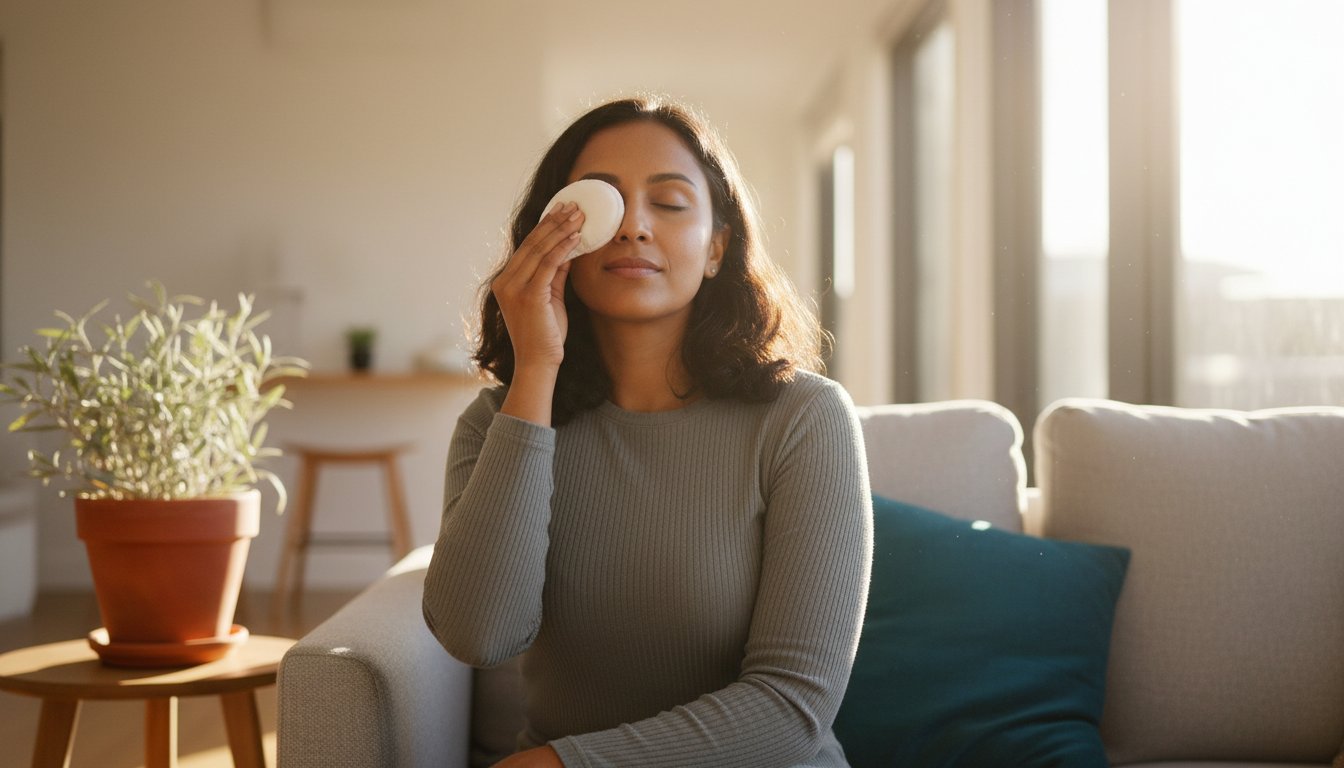
A stye, also called a hordeolum, is a small, painful lump on the eyelid caused by infection of an eyelash follicle or nearby eyelid gland. Most styes improve on their own. The safest first steps are a comfortably warm compress, gentle eyelid hygiene and avoiding squeezing or popping the lump.
See a doctor promptly if the whole eyelid becomes red and swollen, the eye itself becomes red, the lump is very painful or large, your vision is affected, you develop marked light sensitivity, or the stye is not improving after 1 to 2 weeks of self-care.
Quick Answer: How Do You Get Rid of a Stye Safely?
- Apply a clean, comfortably warm compress to the closed eyelid several times through the day.
- Keep the eyelid clean and gently wipe away any discharge with a clean warm washcloth.
- Do not squeeze, pop or pierce the stye.
- Avoid eye makeup while the eyelid is inflamed.
- If contact lenses make the eye sore or irritated, remove them and leave them out until symptoms have settled.
- Seek medical care if swelling spreads, vision is affected, symptoms are severe, or the stye is not improving.
Find Eye Care That Suits Your Needs
Search for an independent optometrist near you and find a local practice that suits your specific eye care needs.
Find an Optometrist →What Is a Stye?
Healthdirect describes a stye as a small, painful lump on the outside or inside of the eyelid. A white spot in the centre may indicate pus. Styes are usually caused by a bacterial infection affecting an eyelash follicle or eyelid gland.
External vs Internal Stye
An external stye forms near the eyelash line and is often easier to see. An internal stye forms deeper inside the eyelid and may feel more tender or swollen. Both can improve with conservative care, but a deeper or very painful lump may need professional assessment.
What Are the Symptoms of a Stye?
- A tender or painful lump on the eyelid.
- Local redness and swelling.
- A white or yellow point if pus is present.
- Watery or irritated eyes.
- A gritty or foreign-body sensation.
- Mild eyelid swelling around the lump.
What Causes a Stye?
Styes are usually caused by bacterial infection around an eyelash follicle or eyelid gland. Blocked eyelid glands and inflammation can also contribute.
Factors That May Increase the Risk
- Blepharitis or ongoing eyelid-margin inflammation.
- Touching or rubbing the eyes with unwashed hands.
- Eye makeup or products that irritate or contaminate the eyelid margin.
- Poor contact-lens or eye-area hygiene.
- Recurring eyelid-gland blockage.
How to Use a Warm Compress for a Stye
A warm compress is the main self-care treatment recommended in Australian guidance. Healthdirect advises placing a clean warm washcloth over the closed eyelid for 2 to 5 minutes at a time and repeating this through the day. The compress should feel comfortably warm, never hot enough to burn the skin.
After the compress, gentle eyelid massage may be comfortable for some people. Do not press hard on the lump or try to force it to drain.
What Should You Avoid?
- Do not squeeze, pop, pierce or cut the stye yourself.
- Do not use very hot compresses.
- Do not rub the eye or eyelid.
- Avoid eye makeup while the area is inflamed.
- Do not use leftover antibiotic eye drops or ointment unless a clinician or pharmacist has advised you to use them for this episode.
- Do not share towels, face washers or eye makeup.
Can You Pop a Stye?
No. Healthdirect advises against squeezing or popping a stye because pus can be pushed into nearby tissue and the infection can spread. Allow it to drain on its own or seek medical care if it is not improving.
Stye vs Chalazion: What's the Difference?
| Feature | Stye | Chalazion |
|---|---|---|
| Typical feel | Usually painful and tender | Often less painful, especially after the early stage |
| Cause | Usually infection of a follicle or gland | Blocked eyelid oil gland |
| Appearance | Red lump, sometimes with a white point | Firm eyelid lump, often without pus |
| First-line care | Warm compress and hygiene | Warm compress and monitoring |
A stye and chalazion can look similar, and a stye may leave behind a residual lump as inflammation settles. If you are unsure which type of eyelid lump you have, especially if it is persistent or recurrent, arrange an assessment.
Find Eye Care That Suits Your Needs
Search for an independent optometrist near you and find a local practice that suits your specific eye care needs.
Find an Optometrist →How Long Does a Stye Last?
Many styes improve on their own, but the exact timeline varies. Healthdirect notes that the lump can sometimes take much longer to disappear completely even after the acute pain and redness settle.
See a doctor if the bump is worsening or not improving after 1 to 2 weeks of self-care, or sooner if you develop concerning symptoms.
Do Antibiotic Eye Drops Help a Stye?
Not every stye needs antibiotics. Royal Children's Hospital guidance notes that topical antibiotics are of limited value for an uncomplicated stye or chalazion. Antibiotic ointment, drops or oral antibiotics may be used when the surrounding skin becomes infected or another clinical reason is present.
If you think you need antibiotics, ask a doctor, pharmacist or optometrist rather than using leftover medication from an earlier eye problem.
What About Pain Relief?
If the eyelid is sore, standard over-the-counter pain relief such as paracetamol or ibuprofen may be suitable for some people. Follow the label instructions and ask a pharmacist or doctor if you have medical conditions, take other medicines, are pregnant, or are unsure which option is safe for you.
Can You Wear Contact Lenses With a Stye?
If the eye or eyelid is sore, irritated or infected, it is sensible to stop wearing contact lenses until symptoms have settled. Healthdirect advises people with sore eyes to remove contact lenses and leave them out until symptoms are gone because contact-lens-related infections can be serious.
Can You Wear Eye Makeup With a Stye?
Avoid eye makeup while the eyelid is inflamed or draining. Makeup can irritate the eyelid and may contaminate applicators or products. Do not share eye makeup, and replace products if you think they may have become contaminated.
When Should You See a Doctor or Optometrist?
Most uncomplicated styes settle with self-care, but Healthdirect recommends medical review if the stye is not improving or if the symptoms are more severe.
- The bump is worsening or is not improving after 1 to 2 weeks of self-care.
- The lump becomes very large or very painful.
- The stye obstructs your vision.
- You develop a blister on the eyelid.
- The whole eyelid becomes red.
- The eye itself becomes red.
- You develop marked sensitivity to light or excessive tearing.
- Another stye returns soon after the previous one has resolved.
When a Stye Needs Urgent Medical Care
A rare but serious complication is cellulitis, where infection spreads into the surrounding skin. Healthdirect advises immediate medical care if the skin around the eye becomes red, warm, swollen or increasingly painful.
- Rapidly increasing eyelid or facial swelling.
- Spreading redness or warmth around the eye.
- Fever or feeling generally unwell.
- A sudden change in vision or vision loss.
- Severe eye pain or marked light sensitivity.
What If the Stye Keeps Coming Back?
Recurring styes can be associated with blepharitis or repeated eyelid-gland blockage. Recurrent lumps deserve assessment rather than repeatedly treating them at home without checking the cause.
A clinician may review eyelid hygiene, skin conditions, gland function and whether the lump is actually a chalazion or another eyelid lesion.
Can Stress Cause a Stye?
Stress is not established as a direct cause of a stye. A stye is primarily related to infection or gland blockage. Stress may indirectly affect sleep, hygiene or general wellbeing, but it should not be presented as a proven trigger.
Are Natural Remedies Like Tea Bags or Gold Rings Useful?
There is no good evidence that rubbing a gold ring on the eyelid or using household remedies is more effective than a clean warm compress. Anything placed near the eye can introduce irritants or contamination, so a clean warm washcloth is the safer approach.
How to Reduce the Chance of Another Stye
- Wash your hands before touching your eyes.
- Avoid rubbing or squeezing the eyelids.
- Keep reusable warm-compress cloths clean.
- Remove eye makeup properly and avoid sharing it.
- Follow good contact-lens hygiene.
- Manage blepharitis or recurring eyelid inflammation with professional guidance.
Find Eye Care That Suits Your Needs
If a stye is persistent, recurrent or affecting your vision, use the Australian Made Vision directory to find an independent optometrist. Confirm services, fees and availability directly with the practice.
Find an Optometrist →Frequently Asked Questions
How do I get rid of a stye fast?
There is no guaranteed fast cure. The safest approach is a warm compress, gentle hygiene and avoiding squeezing. Seek medical care if it is worsening or not improving.
How long does a stye usually take to go away?
The painful, inflamed stage often settles before the lump disappears completely. The timeline varies, and Healthdirect advises medical review if it is not improving after 1 to 2 weeks of self-care.
Can I pop a stye if it has a white head?
No. Squeezing or popping can push infection into nearby tissue and increase the risk of spread.
What causes a stye in the eye?
Styes are usually caused by bacterial infection of an eyelash follicle or eyelid gland. Eyelid inflammation such as blepharitis can increase the risk.
Are styes contagious?
A stye itself is not usually described as highly contagious in the way conjunctivitis can be, but bacteria can spread through poor hygiene. Wash your hands and avoid sharing towels or eye makeup.
Do eye drops get rid of a stye?
Lubricating drops may soothe irritation, but they do not remove the eyelid lump. Antibiotic drops or ointments are not routinely needed for every stye and should be used when clinically appropriate.
Can a stye turn into a chalazion?
A residual blocked gland or lump can remain after the painful infection settles. This may behave more like a chalazion and can persist longer.
Should I see an optometrist or GP for a stye?
Either may assess an eyelid lump. A GP is appropriate if there are signs of spreading skin infection or systemic illness. An optometrist can assess whether the lump is affecting the eye or vision and advise on eye-related causes and referral.
Can I wear contact lenses with a stye?
If the eye or eyelid is sore or irritated, stop wearing contact lenses until symptoms are gone. Seek prompt assessment if the eye itself is red, painful or sensitive to light.
What if my stye keeps coming back?
Recurrent styes should be assessed because blepharitis, repeated gland blockage or another eyelid condition may be contributing.